Why Equestrian Motivation Dips and How to Get It Back
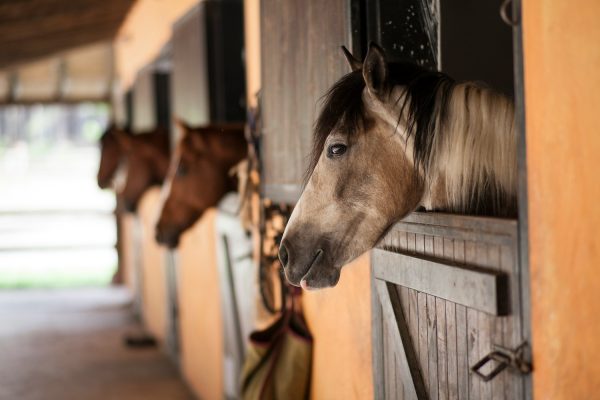
Have you ever woken up, looked out at the weather, and realised you’ve completely lost your riding mojo? You know what I mean, that spark of motivation that used to have you bouncing out of bed, excited to head to the yard, train or get ready for your next competition.
When that spark vanishes, trying to get yourself going can feel like you’re swimming through thick custard while wearing heavy lead boots. It’s deeply frustrating, exhausting and often accompanied by a heavy dose of guilt. But here is the first thing you need to know: almost every single rider experiences this at some point. You are not broken and you haven’t fallen out of love with horses. You’ve simply hit a mental block, and fortunately, there are proven ways to get back on track, even when your immediate motivation seems to have completely disappeared.
Why the Loss of Equestrian Motivation Happens
To fix a dip in your riding drive, we first need to look beneath the surface at why it happens. In my work as an equestrian NLP Master Coach & Master Trainer, I see three primary culprits behind a sudden loss of momentum:
1. Life Overwhelm
Modern life is a massive juggling act. When you are balancing demanding work hours, family duties, financial pressures and social commitments, your mental and physical energy reserves naturally run low. Sometimes, your unconscious mind steps in and decides that it is safer and more efficient to focus your limited energy elsewhere. As a result, riding gets pushed to the back burner simply as a biological energy-saving mechanism.
A study investigating equestrian burnout found that 47% of dual-career equestrians—those balancing a job of at least 30 hours a week with managing their horses on DIY or part-livery—are experiencing high levels of burnout*.
47% of dual-career equestrians are experiencing high levels of burnout.
2. Fear and Mental Blocks
Another incredibly common reason for a dip in motivation is underlying anxiety or fear. Fear is sneaky; it doesn’t always show up as a racing heart. Often, it masks itself as procrastination or boredom. You might find yourself avoiding the saddle or skipping entries for competitions because you are afraid of failing, or, paradoxically, because you are afraid of the pressure that comes with succeeding. If you’ve had a bad fall, a scary experience, or an intense period of performance anxiety in the past, the thought of stepping out of your comfort zone creates a subconscious block designed to keep you safe by keeping you away from the horse.
3. Breaking the Routine Habit
Sometimes it isn’t an emotional crisis; it’s just a broken habit. Many riders start out with great intentions, using pure willpower to schedule rides and plan intensive training sessions. But then real life intervenes: bad weather sets in, you have an exhausting week at work, or you just experience a temporary lack of enthusiasm. Over time, the physical habit of riding fades, and without a strict routine, the friction of getting started feels too high to overcome. Willpower is a finite resource; it inevitably runs out when conditions aren’t perfect.
Motivation vs. Drive: Understanding the Difference
When equestrians talk about getting inspired, they usually focus on two traditional types of motivation: feeling-based and word-based
While both methods work beautifully when you’re feeling good, they both fail when you are genuinely exhausted, anxious, or burnt out. That is where a deeper, far more sustainable internal force comes into play: Drive.
In its purest sense, drive is an internal compass that pushes you toward a goal regardless of how you feel in the exact moment. Think of drive like hunger or thirst—it is a biological or deeply ingrained psychological necessity that compels you to act. When you tap into your core drive, you don’t need to wait to “feel motivated” to pull on your boots. Even when the winter weather is miserable, the arena is frozen, or you are completely exhausted from your day job, your internal drive provides the quiet momentum to step forward anyway.
How to Cultivate Drive Using NLP
If you want to move past fickle feelings and build lasting drive, you need to shift your focus from short-term excitement to long-term identity. Start by reconnecting with your deep “Why” – the underlying purpose behind your riding that goes far beyond ribbons or perfect dressage markers.
- Write down the first ‘why’ that comes to mind – ‘Why do I want to ride?’
- Look at your answer – now ask, ‘For what purpose?’
- Continue asking ‘For what purpose?’ until your answer becomes deeper, richer and more memorable. That’s your equestrian motivation statement.
- Write it down, put it on a piece of paper in your yard coat pocket
- As you rummage in your pocket for your keys, treats and phone, remind yourself of your ‘Why.’
By anchoring your daily habits to this core purpose and using Neuro-Linguistic Programming (NLP) techniques to clear away the old fear blocks or neural patterns holding you back, consistency becomes natural. You stop waiting for motivation to strike and start relying on a deeply rooted internal momentum that keeps you moving forward, no matter how tough things get.
If you’d like help with this or any other mindset or mental block challenge, contact me at info@traceycolenlp.com or sign up for a complimentary chat on Zoom
*The statistic comes from a study conducted by researcher Megan Lane, published in early 2025 in Horse & Hound.
The research was specifically a sport and exercise psychology dissertation study that investigated “dual-career” equestrians—specifically focusing on women who work at least 30 hours per week and manage horses outside of their day jobs on DIY or part-livery.